Operation principle of adaptive cruise control
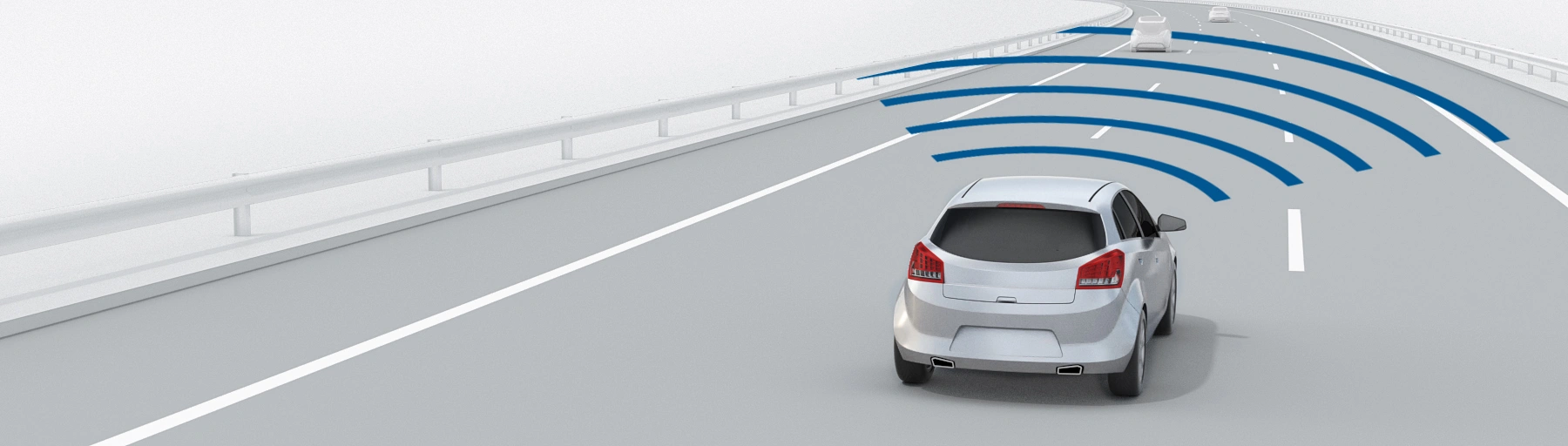
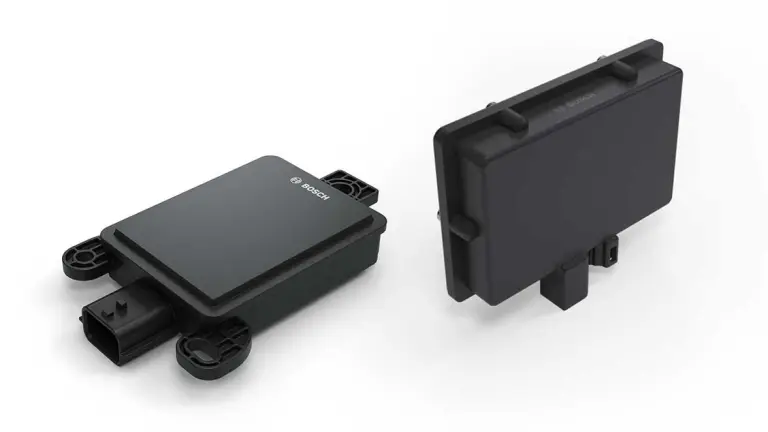
A radar sensor is usually at the core of the adaptive cruise control (ACC). Installed at the front of the vehicle, the system permanently monitors the road ahead. As long as the road ahead is clear, ACC maintains the speed set by the driver. If the system spots a slower vehicle within its detection range, it gently reduces speed by releasing the accelerator or actively engaging the brake control system. If the vehicle ahead speeds up or changes lanes, the ACC automatically accelerates to the driver’s desired speed. Standard ACC can be activated from speeds of around 30 km/h (20 mph) upwards and supports the driver, primarily on cross-country journeys or on freeways.
The ACC stop & go variant is also active at speeds below 30 km/h (20 mph). It can maintain the set distance to the preceding vehicle even at very low speeds and can decelerate to a complete standstill. If the vehicle has automatic transmission, and the traffic hold-up is only brief, ACC stop & go can set the vehicle in motion once again. When the vehicle remains stopped longer, the driver needs only to reactivate the system, for example by briefly stepping on the gas pedal to return to ACC mode. In this way, ACC stop & go supports the driver even in heavy traffic and traffic jams. Since ACC is a comfort and convenience system, brake interventions and vehicle acceleration only take place within defined limits. Even with ACC switched on, it remains the driver’s responsibility to monitor the speed and distance from the vehicle in front.